

What the direct selling sector needs to know about influencer marketing in 2026
Influencer marketing has moved far beyond selfies, discount codes, and vanity metrics. Once viewed as a trend driven by social media popularity, it has evolved into a structured, data-driven channel that plays a critical role in modern digital strategy. Today, leading brands treat it not as “buying posts” but as building a content supply chain, where high-performing creator content is repurposed into paid media assets that typically deliver 2-4x higher click-through rates than standard brand-shot ads.
But the question still dominates boardrooms and marketing meetings alike: does influencer marketing actually deliver real business results? The short answer is yes, when it’s done properly.

Why Influencer Marketing Exists in the First Place
Traditional advertising is facing a trust problem. Consumers are exposed to thousands of ads every day and have become highly skilled at ignoring brand-led messages. This is described as a “trust deficit” and “banner blindness,” where corporate messages are instinctively filtered out.
Influencer marketing works because it shifts the message from the brand to a trusted human voice. This process is defined as Trust Arbitrage – borrowing the credibility of a creator to reduce perceived risk and purchase friction
People don’t follow influencers for ads, they follow them for opinions, experiences, and authenticity. When a creator recommends a product, it feels closer to word-of-mouth than advertising. Research shows that 69% of consumers trust influencer recommendations over direct brand advertising particularly among younger and digitally native audiences. That stat is hard to ignore.
The Shift From Reach to Results
Early influencer campaigns tended to obsess over follower counts and likes. Today however successful brands look much deeper.
Modern influencer marketing prioritises the following:
- engagement quality, not audience size
- relevance, not celebrity status
- conversion and long-term value, not short-term buzz
This is why micro- and nano-influencers often outperform large celebrity accounts. In fact, nano-influencers (under 10,000 followers) now hold the strongest value proposition, delivering engagement rates of roughly 10.3%, compared with 1–2% for mega-celebrities
This is because their audiences see them as peers, they are relatable, not distant personalities and that intimacy drives high-intent purchasing decisions.
This shift represents what can be referred to as Influencer 2.0, where relational capital, the strength of the relationship between creator and audience matters more than raw reach.
Influencer Marketing and ROI
Far from being “hard to measure,” influencer marketing is one of the most measurable and capital-efficient digital channels available.
The Institute of Practitioners in Advertising (IPA) benchmarking data cites that:
- For every £1 spent, influencer marketing returns £5.78
- Paid social returns £2.80
- Online display returns £1.35
This represents a fundamental shift in capital efficiency
Influencer content also has a long-term profit multiplier of 3.35x, continuing to generate value through search, sharing, and brand equity long after posting. Unlike ads that stop working when the spend stops, creator content keeps influencing decisions over time.
Another powerful metric is Conversion Velocity how quickly a consumer moves from discovery to purchase. During Cyber Week 2025, influencer-led campaigns nearly doubled their share of total orders year-on-year showing how trust compresses the buying journey.
Choosing the Right Platforms
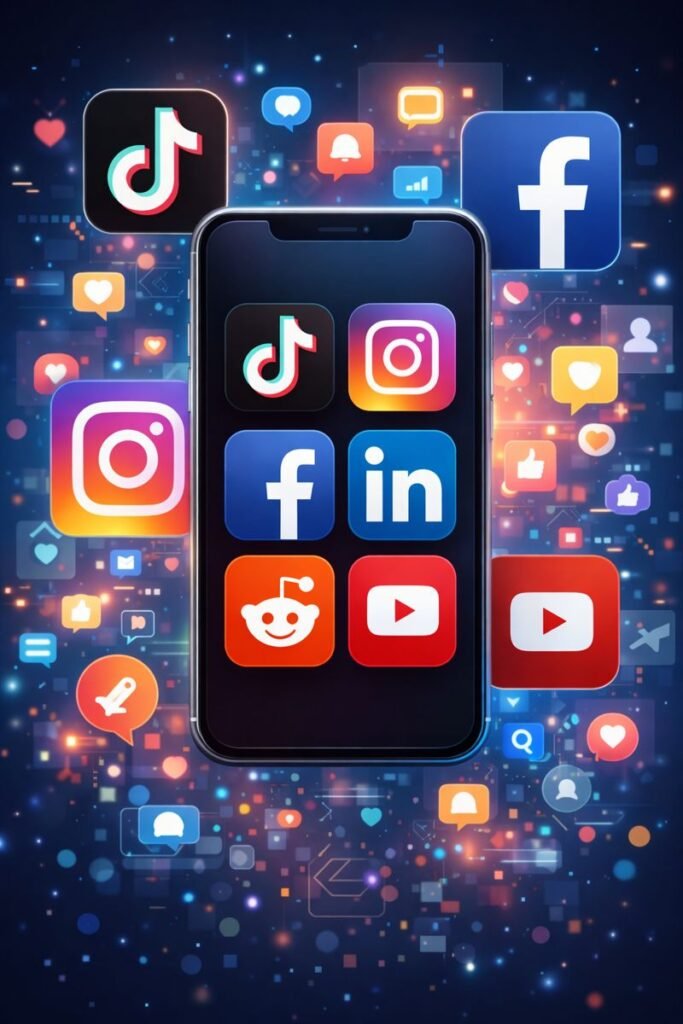
Not all platforms serve the same purpose and it is important to avoid “platform agnosticism”, treating every network as if it does the same job.
Successful strategies match platform to objective:
- Instagram conversion engine for lifestyle and impulse purchases
- TikTok discovery and search, especially Gen Z
- YouTube long-form trust for complex or high-ticket products
- LinkedIn fastest-growing B2B authority channel
- Facebook older demographics and local reach
- Reddit & niche communities high-trust, low-competition “source of truth” discussions
There are differences too in sector-specific performance: while health and beauty continues to see the highest raw volume, financial services and telecoms are seeing rapid growth because trusted expert influencers help reduce friction in high-risk purchasing decisions.
Influencer Marketing in 2026 and Beyond
AI is fundamentally changing discovery with Generative Engine Optimisation (GEO) ensuring brands are mentioned positively inside AI-generated results As consumers increasingly ask AI tools for recommendations, the brands discussed positively by creators will surface more often. Put simply, influencer marketing is no longer just influencing people. It is now influencing search engines and AI systems.
From Posts to a Content Supply Chain
Perhaps the most important shift described is operational. Brands must move from one-off influencer posts to building an integrated content supply chain where influencer assets fuel:
- paid social creative
- landing pages
- search
- social proof
This requires marketing, finance, and operations around the same table and structured planning rather than sporadic campaigns.
Influencer marketing isn’t a shortcut, a trend, or a replacement for strategy. It is a trust-based channel that rewards long-term thinking, careful planning, and authentic partnerships.
Campaigns fail when brands:
- chase vanity metrics
- treat influencer work as “digital window dressing”
- act without strategy or integration
Campaigns succeed when brands:
- invest in relational capital
- repurpose creator assets across channels
- measure conversion velocity and ROI
- plan with board-level alignment
Influencer marketing works and the data is unequivocal, but like any powerful tool, its impact depends entirely on how you use it.
Our thanks go to our Meridian MMi colleague David Lilley
With over 30 years’ experience in sales, marketing, and business development David brings a wealth of experience from blue-chip giants like American Express, Barclays, Hiscox Insurance, Forever Living, Wyndham Hotels (RCI) and Mastercard. He has received European and Global Awards for his work at American Express and RCI.
His career has spanned diverse industry sectors and international markets, including the USA, Sweden, Germany, Cyprus, Spain, France and the UK, equipping him with a global perspective. This broad experience has honed his strategic approach, enabling him to effectively integrate sales strategy, marketing and business development expertise into a 360-degree business strategy.
His passion lies in collaborating with forward-thinking companies that prioritise continuous improvement. He is committed to leveraging his extensive experience to drive success for clients within the dynamic direct selling industry, fostering growth and innovation.
Glossary of Strategic Terms
Trust Arbitrage: The process of “borrowing” the established credibility of a creator toreduce the consumer’s perceived risk and friction during a purchase.
Relational Capital: The measurable value of the social bond and trust between a creatorand their audience.
Generative Engine Optimisation (GEO): The practice of ensuring a brand is mentionedand recommended within AI-generated search results.
Conversion Velocity: The speed at which a potential customer moves through thebuying journey from first seeing the product to completing the transaction.