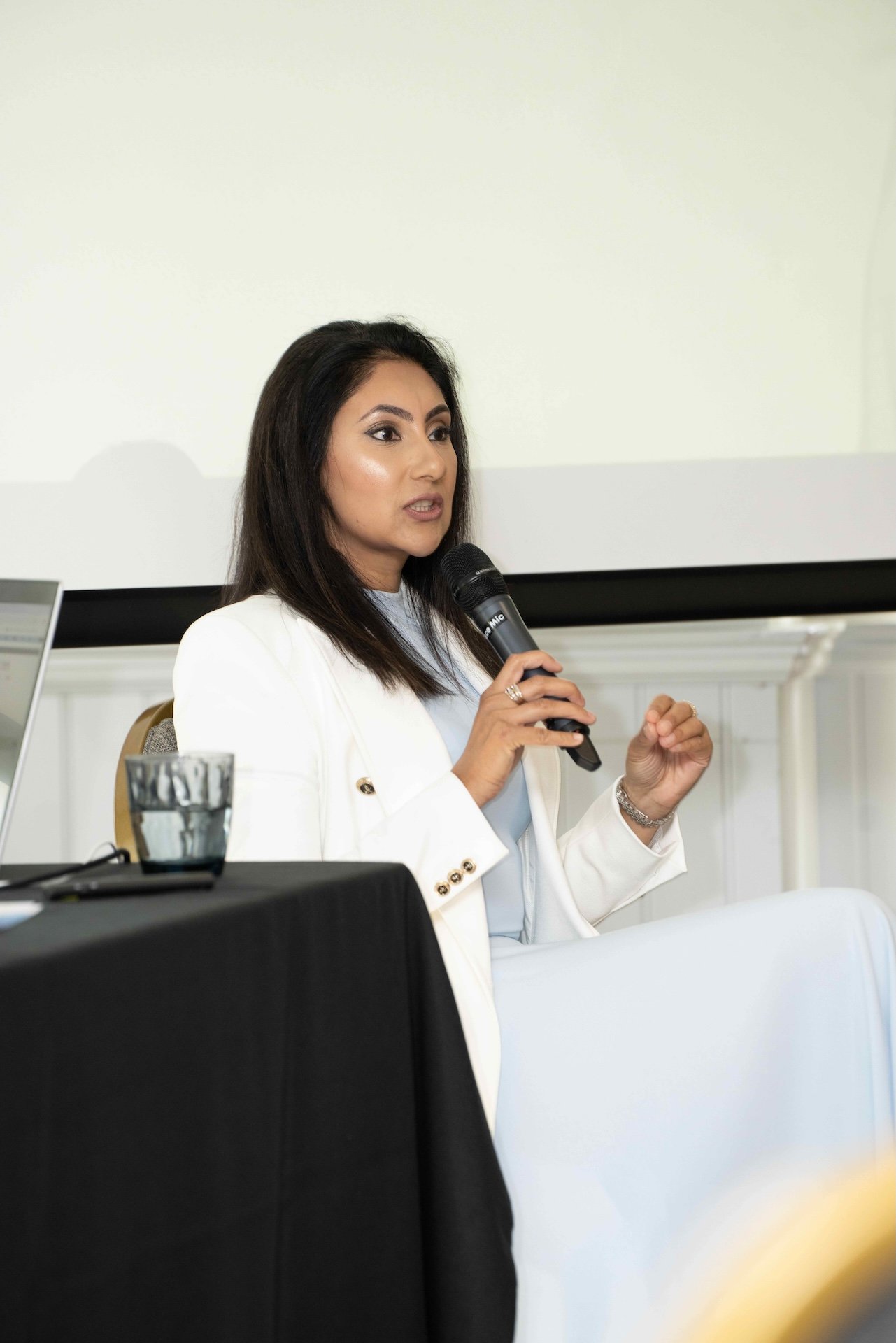
The Future of Consumer Behaviour: Why Human Connection Matters More Than Ever - Dr Amna Khan
This article in based on the recent Selling in Europe Podcast with Dr. Khan
We live in an age of algorithms. Artificial intelligence can predict what you want before you know you want it. And yet, despite all this technological sophistication, I keep coming back to the same conclusion: the future of consumer behaviour is fundamentally, stubbornly human.
That might sound unusual coming from someone who studies the intersection of technology and purchasing psychology. But it is precisely because I spend so much time in that space that I have come to believe it.
From the Shop Floor to the Research Lab
My fascination with why people buy things did not begin in a lecture hall. It began on the shop floor at JD Sports and House of Fraser, watching customers and trying to figure out what was going on in their heads. Some headed straight for the sale rail; others circled for twenty minutes before committing to anything.
When I later studied marketing at Alliance Manchester Business School, I finally found the framework for everything I’d been observing. I walked out of one consumer behaviour lecture thinking: “that’s my subject.” It has been ever since.
A Market in Tension
The consumer landscape in 2026 is one of contradiction. Businesses have invested heavily in AI and automation — and the efficiency gains are real. But consumers are simultaneously showing a growing hunger for connection, authenticity and interactions that feel genuinely human.
The most successful businesses I see are not those who have gone furthest into automation. They are the ones who use technology to free up their people to have better, more meaningful conversations with customers. Technology should create space for human connection, not replace it.
“Technology should create space for human connection, not replace it.”
Wired for Connection, Exhausted by Screens
Researchers were writing about the “paradox of technology” back in 1998 — the idea that technology can simultaneously bring people together and push them apart. Social media illustrates this perfectly. More recently, experiments with AI companions have suggested that some forms of AI interaction can actually increase loneliness over time.
What has not changed is this: human beings are wired for connection. We lived in tribes and communities for most of our evolutionary history. Belonging was not a preference — it was survival. The COVID-19 lockdowns reminded us of that viscerally.
Screen fatigue adds another layer. Many consumers are simultaneously dependent on their devices and exhausted by them. Short-form video platforms are engineered to be addictive — TikTok’s dopamine loop is a design feature, not a side effect. The result is a growing appetite for experiences that feel more personal, more physical, more real.
Relatability Is the New Celebrity
Perhaps the most significant shift in consumer behaviour over the past decade is the democratisation of influence. Brands once relied on celebrities — and their power remains formidable. When Cristiano Ronaldo moved Coca-Cola bottles aside at a press conference, the company’s market value reportedly dropped by billions. One gesture.
But today, you do not need to be Ronaldo. A stay-at-home parent with an honest product review community can move purchasing decisions just as powerfully within their niche. What makes micro-influencers effective is not reach — it is relatability. Consumers trust people who seem to live lives like their own.
Credibility remains contextual, though. Trust a food influencer on recipes? Yes. The same person on cars? Probably not. The moment a creator strays beyond their authentic expertise, that trust evaporates. Consumers are remarkably good at detecting incongruence.
“Consumers are remarkably good at detecting incongruence.”
Imperfection as a Competitive Advantage
Trust is being fundamentally renegotiated. It used to be institutional — you bought from a reputable brand and that was your guarantee. Today’s consumers arrive at a purchase having already researched reviews, comparisons and opinions. They are the most informed generation of consumers in history, and correspondingly the most sceptical.
The rise of AI deepens this challenge. When technology can generate convincing images and videos that never happened, consumers face a real question: how do I know what is real? Counterintuitively, they look for imperfection. A slightly shaky phone video from a genuine customer carries more weight than a polished brand advertisement, because the shakiness itself signals authenticity. Vulnerability and transparency are becoming competitive advantages.
This is why direct selling is exceptionally well positioned right now. It is a relationship model: trust is established with the individual advisor first, and the product second. Many advisors have personally used what they recommend, combining brand knowledge with lived experience. In a world where consumers want to trust people rather than institutions, that is a structural advantage.
The Most Powerful Competitive Advantage
I am not arguing that technology is the enemy of good commerce. AI and digital tools will continue to transform retail, and businesses that ignore them do so at their peril.
What I am arguing is that technology is a means, not an end. The businesses that will thrive are those that use it to become more human, not less — automating the transactional so they can invest in the relational.
In a world of algorithms and endless screens, the most powerful competitive advantage may simply be showing up as a real, imperfect, caring human being.
That is not a soft idea. That is strategy.
Why Direct Selling Has Never Been Better Positioned
All of these trends — the hunger for connection, the trust shift toward individuals, the premium on authenticity, the fatigue with digital noise — converge to create an exceptional environment for direct selling.
Direct selling is, at its core, a relationship model. The trust relationship is with the individual advisor first, and the product second. That is the inverse of traditional retail, where the relationship is primarily with the brand.
In a world where consumers increasingly want to trust people rather than institutions, that is a significant structural advantage.
There is also the matter of product knowledge. Many direct sellers use the products they recommend. They are not reading from a script or displaying a promotional poster — they are drawing on lived experience. In an environment where consumers are overwhelmed with choice and sceptical of advertising, that kind of informed, personal recommendation is extraordinarily valuable.
Direct selling networks, built on genuine relationships, real expertise and community trust, are well positioned not just to survive the current environment — but to lead it.
Dr Amna Khan is a Consumer Behaviour Expert and media commentator. She regularly speaks at Direct Selling Events – connect with her on LinkedIn